

The 6 Best Options for Flooring Financing in 2026
Last updated: 2026-11-25
Renovating a house is a massive undertaking that often feels like a race against rising material costs. When the shipment of hardwood or luxury vinyl tile finally arrives, the final invoice can leave a sudden, gaping hole in the monthly budget. Finding a way to fill that gap is essential to keep the project moving.
A delay in payment might cause contractors to walk off the job or result in lost discounts on materials. Even worse, an unfinished renovation can leave subfloors exposed to damage if funds run dry halfway through the work. Keeping the momentum is the only way to ensure the job gets finished properly.
Picking a lender involves more than just chasing the lowest number on a screen. You have to consider how quickly cash hits your bank account and whether the process will bruise your credit score. Every homeowner faces a different financial reality.
A homeowner with a 750 credit score has access to much different tools than a first-time buyer attempting to repair water-damaged oak planks on a tight budget. Your personal circumstances and the scale of the project should dictate your choice.
- FastLendGo
- Giggle Finance
- SoFi
- Brigit
- First Tech Federal Credit Union
- MoneyLion
How These Flooring Lenders Were Evaluated
The selection process focused on accessibility for different types of borrowers, ranging from those with pristine credit to those with a rocky financial past. Since flooring projects can scale from a small bathroom refresh to a full-house overhaul, the ability to adjust loan amounts was a primary metric.
Speed of funding also mattered for urgent repairs. A homeowner might need to secure a subfloor before a heavy rainstorm or a change in seasonal temperatures affects the home’s structural integrity. Quick access to cash can prevent a minor leak from becoming a major disaster.
Each provider was assessed based on the specific needs of a contractor or homeowner facing unexpected renovation costs. This included looking at specialized loan types, such as those designed for home improvements or those meant for small business owners managing a trade.
We looked at the distinction between unsecured personal loans, which are quick but often carry higher interest rates, and more structured lines of credit that might require more documentation but offer better long-term terms. The goal was to identify which lenders offer the most flexibility in a modern economy.
| Lender Name | Max Loan Amount | Funding Speed | Credit Requirements |
|---|---|---|---|
| FastLendGo | $5,000+ | Quick Access | Bad, Fair, or Great Credit |
| Giggle Finance | $15,000 (up to $20k) | Minutes | Self-employed/Contractors |
| SoFi | See site | See site | See site |
| Brigit | $500 | Minutes | No credit check |
| First Tech Federal Credit Union | See site | See site | Membership Required |
| MoneyLion | $100,000 | Fast/Expedited | See site |
Top-Rated Financing Options for Your Project
1. FastLendGo

If you find yourself staring at a broken floor and wondering where to turn, this option serves as a versatile bridge. It is designed to help people compare local personal loan options quickly. Whether you are dealing with a sudden leak or a scheduled upgrade, the focus is on speed and accessibility.
If a sudden leak has warped your kitchen linoleum, you need funds to remove the damaged material before mold sets in. FastLendGo provides the comparison tools to find that emergency liquidity. It is a practical tool for when time is of the essence.
This lender is particularly useful for those who might have been told «no» elsewhere. They cater to a wide spectrum of credit profiles, including those with bad or fair credit. It is a solid choice for emergency repairs like roof or dental work, but it works just as well for unexpected home flooring needs.
By acting as a conduit to various lenders, it saves the homeowner the dozens of hours that would otherwise be spent filling out individual applications for every local bank in the area. It cuts through the red tape to get you moving.
Pros:
- Covers a wide range of credit scores from bad to great.
- Offers specialized financing for specific home repairs.
- Provides quick access to cash when timing is critical.
Cons:
- May not be the most competitive for those with excellent credit.
2. Giggle Finance
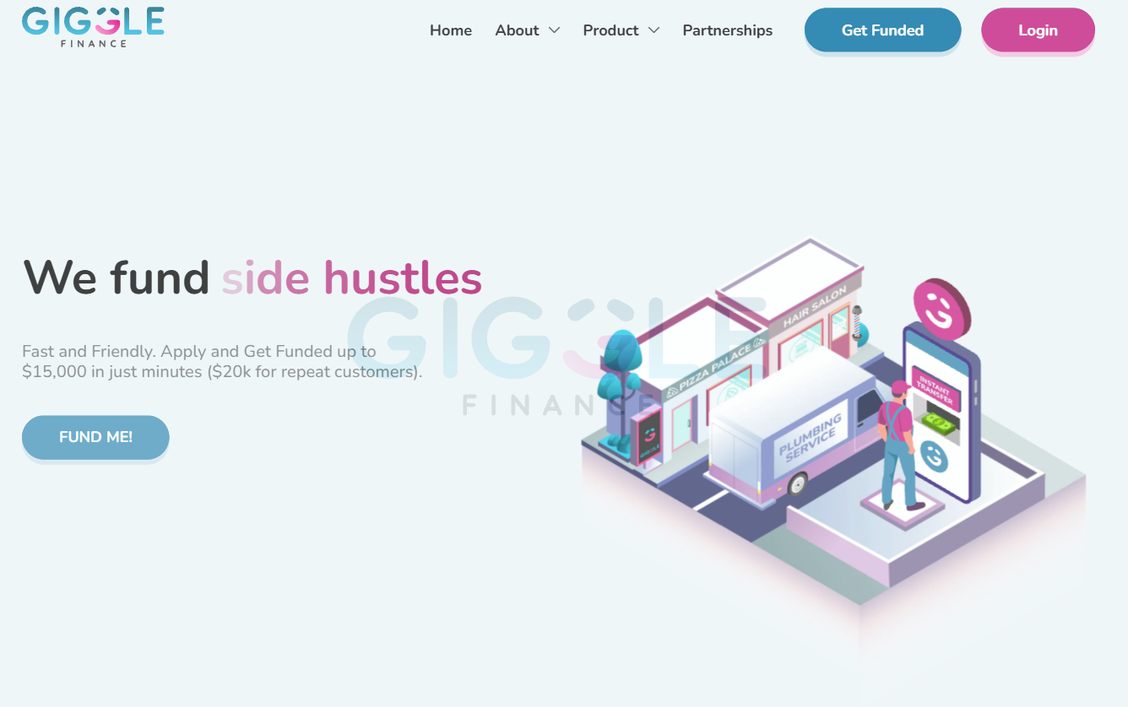
Contractors and small business owners often face a unique headache: waiting for a client to pay before they can buy more materials. This lender specifically targets the «side hustlers» and 1099 workers who keep the construction industry moving. It is a lifeline for those who need to keep a project flowing.
Imagine a flooring specialist who has a massive order of premium wide-plank walnut arriving on Tuesday, but the client’s final payment won’t clear until Friday. This lender bridges that gap, preventing a logistics nightmare. It keeps the tools moving and the workers paid.
The speed here is hard to beat, with funding available in just minutes. For repeat customers, the limits can even increase to $20,000. This makes it an excellent tool for a flooring professional who needs to purchase a bulk shipment of tile to finish a job before the weekend arrives.
It transforms «cash flow» from a stressful concept into a manageable business tool. Professionals can scale their operations without being tethered to a traditional, slow-moving bank approval cycle. It is built for the pace of real-world construction.
Pros:
- Very fast approval and funding process.
- Tailored specifically for self-employed individuals and contractors.
- Higher limits for established, repeat customers.
Cons:
- Strictly focused on a specific type of worker/business profile.
3. SoFi

For those who prefer a more comprehensive financial ecosystem, this provider offers a broad array of services. They handle everything from personal loans to business loans and even investments. This makes them a «one-stop shop» for a homeowner who wants to consolidate their entire financial life in one place.
If you are planning a massive renovation that involves both a home equity line of credit and a personal loan for the furniture to match your new floors, SoFi provides a unified digital interface to manage both. Everything stays in one digital dashboard.
The platform is built for modern life, offering various tools including a credit coach and banking services. While it might feel a bit more formal than a quick cash advance, the depth of their offerings provides a level of stability that many high-level renovators appreciate.
They are ideal for the «planned» renovation—the kind where you have spent six months selecting the perfect marble and have a detailed budget ready to go. It is for the homeowner who wants a long-term partner for their financial goals.
Pros:
- Integrated banking, investing, and loan services.
- Offers business-specific loan opportunities.
- Highly sophisticated digital platform.
Cons:
- May have more rigorous requirements than specialized micro-lenders.
4. Brigit
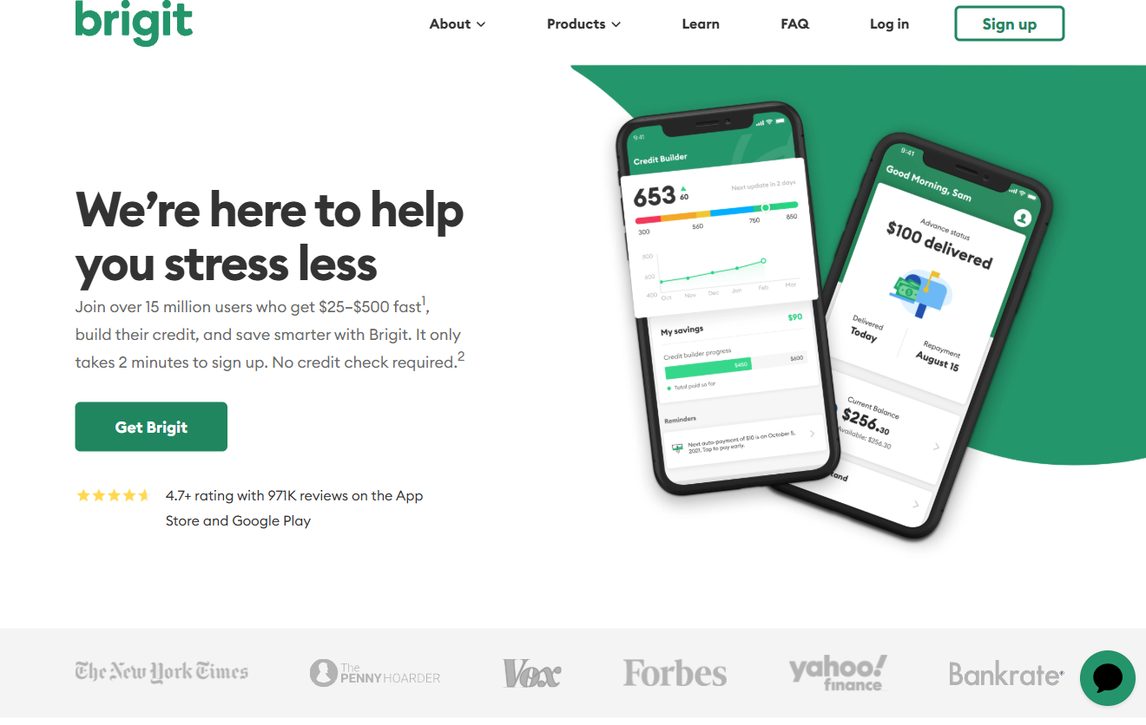
Sometimes, a flooring project doesn’t need a massive loan; it just needs a little help to get through the week. This service is perfect for very small gaps, providing advances between $25 and $500. It is a lightweight solution for the minor expenses that pop up during a renovation.
For instance, if you’ve spent your entire paycheck on a high-quality trowel or a specialized floor cleaner, Brigit can cover the groceries for a few days until your next paycheck arrives. It handles the small stuff so you can focus on the big stuff.
The standout feature here is the lack of a credit check, which removes a huge layer of anxiety for many users. It is designed to help you build credit while you save, making it a helpful companion for someone trying to stabilize their finances while simultaneously fixing up their home.
It is not a tool for the renovation itself, but rather a tool to manage the life disruptions that a renovation inevitably causes. It is a safety net for the little things that can throw a person off balance.
Pros:
- No credit check required for advances.
- Extremely fast approval process.
- Helps users build credit over time.
Cons:
- Low maximum amounts are not suitable for major flooring installs.
5. First Tech Federal Credit Union

For those who value a community-focused approach, a federal credit union can be a breath of fresh air. They operate with a philosophy of returning value to their members through better rates and lower fees. It is a «people-first» way to handle your home improvement financing needs.
Unlike large national banks that may use automated algorithms to reject applications, credit unions often allow for more human interaction and a more nuanced understanding of a member’s local financial standing. You aren’t just a number in a database here.
Membership is required, but the benefits of being part of a cooperative can be significant. They offer a wide range of products, including personal loans and auto loans, which can be helpful if you are managing multiple moving parts in a large-scale home renovation project.
If you are a member of a specific organization or work for certain employers, you may find that your interest rates for home improvement loans are significantly more favorable than those offered by big-box lenders. It is a local approach to global problems.
Pros:
- Member-focused with potentially better rates and lower fees.
- Provides a wide variety of financial products.
- A more personalized, community-oriented banking experience.
Cons:
- Requires membership, which may involve specific employment or affiliation criteria.
6. MoneyLion

If your flooring project is a major, multi-room overhaul, you might need a much larger sum of money. This provider offers personal loans up to $100,000. It is designed for significant life changes, such as paying off debt or making extensive home improvements to increase property value.
If you are gutting a 2,000-square-foot home and replacing every floor from the basement to the attic, a $5,000 bridge loan won’t cut it; you need the heavy lifting capacity that MoneyLion provides. It is built for the big transformations.
Beyond large loans, they also offer tools to help you manage your daily cash flow and build your credit. This dual approach of high-limit lending and daily financial management tools makes them a powerhouse for those looking to transform their living space entirely.
The ability to leverage large capital for long-term asset improvement—like high-end hardwood—can be a strategic way to increase your home’s equity and your net worth simultaneously. It is a tool for long-term wealth building through home equity.
Pros:
- Very high loan limits up to $100,000.
- Includes tools for credit building and daily money management.
- Offers expedited delivery options for cash.
Cons:
- Expedited delivery may require additional fees.
Comparing Loan Types: Unsecured vs. Secured Financing
When looking at flooring financing, it is important to understand the difference between unsecured and secured loans. This distinction can be the difference between a smooth renovation and a long-term financial headache. Most of the lenders mentioned above, like FastLendGo or MoneyLion, primarily offer unsecured personal loans.
This means you don’t have to put your home up as collateral, which is a massive advantage if the renovation goes over budget and you can’t afford to risk your house. You are borrowing based on your promise to pay, not the equity in your walls.
| Feature | Unsecured Personal Loan | Secured Loan (HELOC/Home Equity) |
|---|---|---|
| Collateral Required | No | Yes (Your Home) |
| Interest Rates | Generally Higher | Generally Lower |
| Approval Speed | Very Fast (Days/Hours) | Slow (Weeks/Months) |
| Risk Level | Lower Risk to Assets | Higher Risk to Assets |
Unsecured loans are perfect for «emergency» flooring needs where the damage is active and needs immediate attention. Secured loans, like a Home Equity Line of Credit (HELOC), are better for large-scale, planned renovations where you can afford to wait a few weeks for a bank appraisal.
If you are replacing all the flooring in a house to sell it in six months, a secured loan might offer the lower interest rate you need to maximize your return on investment. It is a trade-off between speed and the total cost of the money.
The True Cost of Flooring Financing: A Step-by-Step Guide
Before you sign a loan agreement to pay for your new tile or laminate, you must perform a «Total Cost of Ownership» check on your debt. Many homeowners make the mistake of only looking at the monthly payment. However, a $200 monthly payment over 60 months is much more expensive than a $400 monthly payment over 24 months.
Step 1: Calculate the Total Interest Paid. Take your monthly payment amount and multiply it by the total number of months in the term. Subtract your original principal amount from that total. The resulting number is what you are actually paying for the «privilege» of having the floor today rather than next year.
Step 2: Factor in Origination Fees. Some lenders, particularly those that offer high-speed funding like MoneyLion or specialized micro-lenders, may charge an origination fee. This is often a percentage of the total loan, such as 3% to 6%, that is taken off the top. If you need $5,000 for flooring but the lender takes a 5% fee, you will only receive $4,750 in your bank account.
Step 3: Evaluate the «Prepayment Penalty» Clause. This is the most overlooked step. If you receive a windfall—perhaps a tax refund or a bonus—and you want to pay off your flooring loan early to save on interest, check if your lender charges a penalty for doing so. If they do, it might be better to look for a lender like SoFi or a local credit union that offers no prepayment penalties.
Navigating Your Financing Choices
Before signing any paperwork, it is vital to look beyond the monthly payment. Always ask about the total cost of borrowing over the life of the loan. A small monthly payment might look enticing, but if the term is too long, you could end up paying double for your new floors in interest alone.
A common mistake is treating a long-term loan as a way to «stretch» a budget, when it is actually a way to increase the total price of the material. Don’t let the monthly number trick you into a much larger total expense.
Avoid the trap of borrowing more than you actually need. It is tempting to «round up» your loan amount to cover extra expenses, but this adds unnecessary weight to your debt. Calculate your material costs, labor, and a small buffer for unexpected waste, and try to stick strictly to that number.
For example, if you estimate $4,200 for luxury vinyl plank, don’t take a $6,000 loan «just in case.» If the project only costs $4,500, you are paying interest on $1,500 of money you never used. It is a waste of your hard-earned cash.
Lastly, never ignore your own budget’s capacity for repayment. A new floor is a beautiful asset, but it becomes a burden if the financing causes a monthly deficit. Compare the lenders listed above against your specific credit score and your immediate timeline to ensure you find the most efficient path forward.
If your priority is speed, go with a micro-lender or a cash advance; if your priority is the lowest possible cost, look toward a credit union or a secured line of credit. Your choice should match your project’s urgency and your financial comfort zone.